
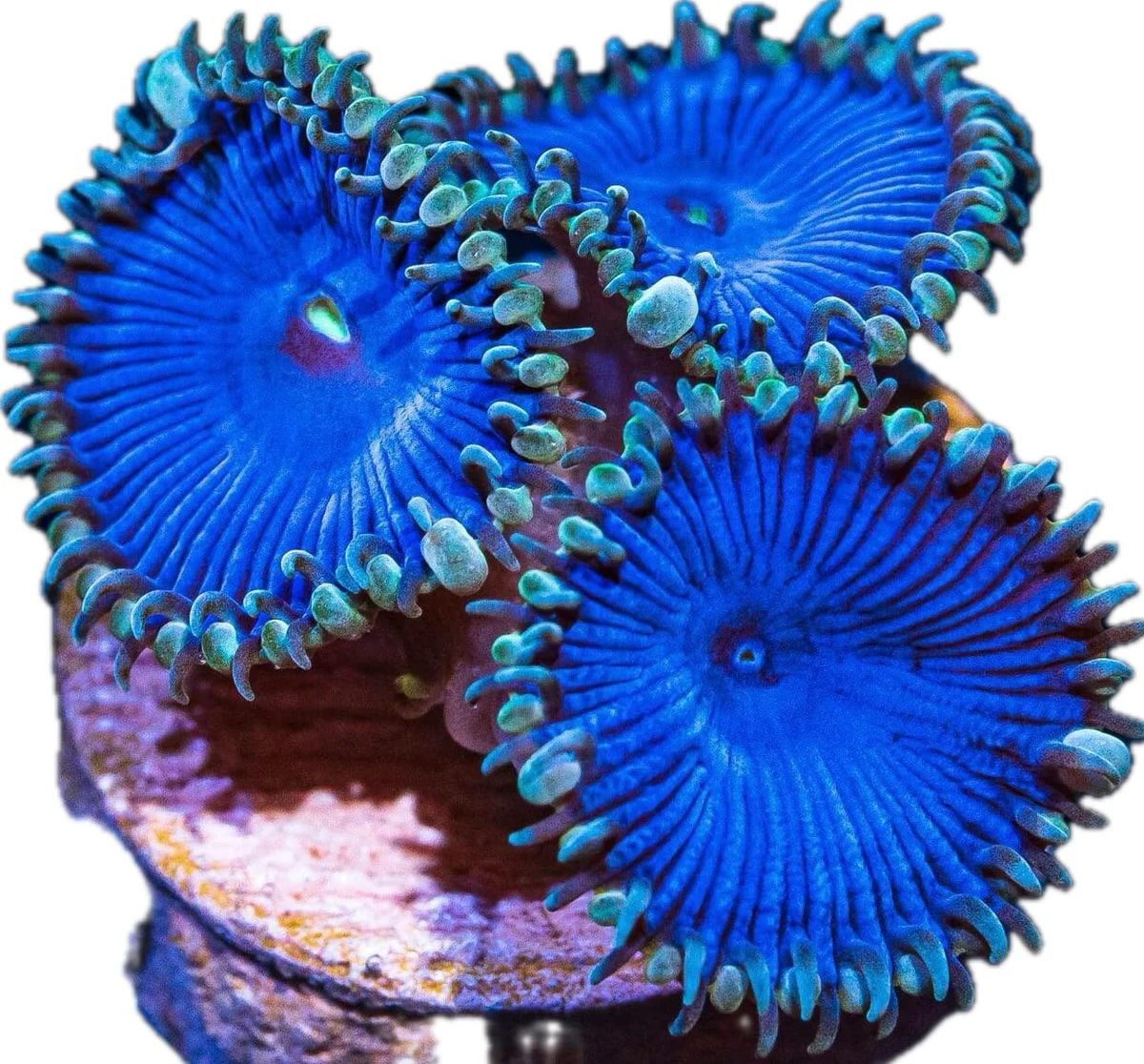
Blue Death Zoa Coral Frag
Blow Pop Zoanthid Coral Frag Species: Blue Death Zoa (Zoanthus spp.)
 Growth Form: Zoanthid (colonial soft coral)
 Coloration: Deep blue to indigo with darker centers
 Temperament: Peaceful; can spread over time
 Tank Size: 10+ gallons
 Placement: Low to mid-level
 Lighting: Moderate to high
 Flow: Low to moderate
 Diet: Photosynthetic (benefits from occasional coral foods)
 Feeding: Optional—reef roids, phytoplankton, or fine particulate foods
 Reef Safe: Yes (with caution—contains palytoxin)
 Care Level: Easy to Moderate
Blue Death Zoa Coral Frag
Available for local pickup and shipping
Common Names:
Blue Death Zoa
Blue Death Zoanthid
Zoanthus spp.
Identification
Blue Death Zoas are a striking and sought-after zoanthid variety known for their deep blue to indigo coloration with contrasting darker centers. Under actinic lighting, their colors intensify, displaying a glowing, almost metallic sheen. Each polyp forms a small button-like disk surrounded by short skirts, creating a vibrant colony as they grow and spread across rockwork.
Size:
Individual polyps typically measure 0.5–1 inch (1–2.5 cm) in diameter.
Behavior & Role in a Reef Tank
Temperament:
Peaceful; grows in colonies and spreads over time.
Habitat:
Encrusting coral that attaches to rock or frag plugs. Expands and multiplies under stable conditions.
Role:
Adds bold color and movement to reef aquariums; great for filling in lower to mid-level areas of the tank.
Compatibility & Caution
Reef-Safe:
Yes—reef safe with most fish and invertebrates.
Aggression:
Mildly competitive; can overgrow nearby corals if not managed.
Caution:
Contains palytoxin—handle with care, avoid contact with cuts or eyes, and wash hands after handling.
Care Level
Difficulty:
Easy to Moderate—great for beginner to intermediate reef keepers.
Water Conditions:
Stable reef parameters recommended:
Temperature: 72–78°F (22–26°C)
Specific Gravity: 1.023–1.025
pH: 8.1–8.4
Diet:
Primarily photosynthetic but benefits from occasional feeding of fine coral foods such as reef roids or phytoplankton.
Tank Mates
Compatible with most reef-safe fish and invertebrates.
Avoid aggressive coral species that may sting or overtake the colony.
Fun Fact
“Death” zoas get their name from their intense, bold coloration—not because they’re difficult to keep. Under the right lighting, Blue Death Zoas can develop even deeper hues, making them a standout piece in any reef aquarium!