
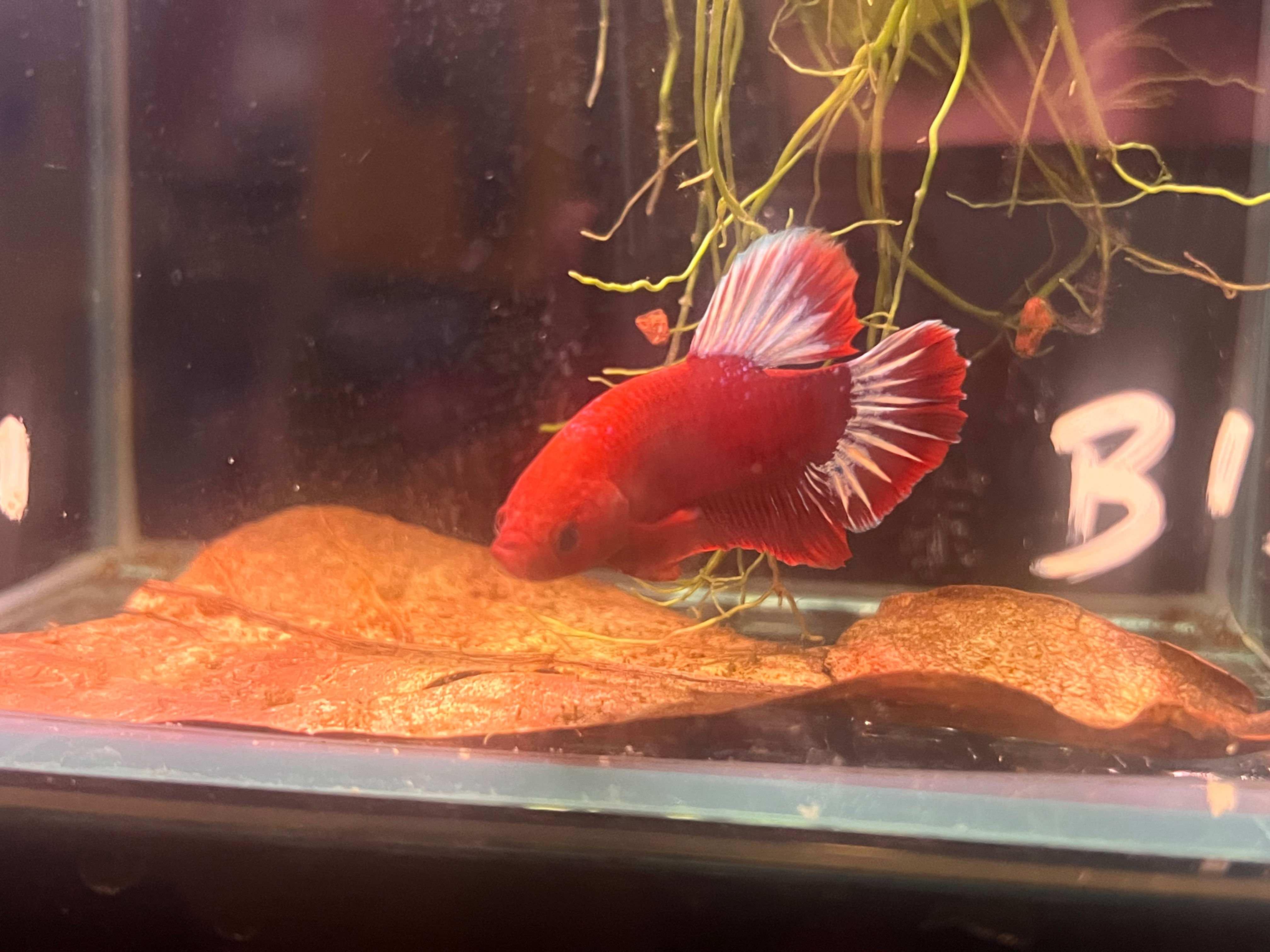
Red Fancy Female Betta
Red Fancy Female Betta
Species:
Betta splendens (Red Fancy Female Betta)
Growth Form:
Short-finned (female form, compact body)
Coloration:
Vibrant red base with possible iridescent accents or subtle marbling (black/blue/white depending on strain)
Temperament:
Semi-aggressive
Tank Size:
Minimum 5 gallons (10+ gallons recommended for sororities/community setups)
Placement:
Top to mid-level swimmer
Lighting:
Low to moderate
Flow:
Low (gentle flow preferred)
Diet:
Carnivorous (protein-rich diet)
Feeding:
High-quality betta pellets, frozen/live foods (bloodworms, brine shrimp, daphnia); feed 1–2 times daily in small portions
Care Level:
Moderate
Betta splendens (Red Fancy Female Betta)
Species:
Betta splendens (Red Fancy Female Betta)
Common Name:
Red Fancy Betta, Red Female Siamese Fighting Fish
Origin:
Captive-bred (derived from Southeast Asian Betta splendens lineage)
Lifespan:
2–4 years (with proper care)
Appearance:
The Red Fancy Female Betta displays a vivid red base coloration, often enriched with subtle iridescent tones or secondary accents such as black, blue, or white depending on the strain. “Fancy” females may show marbling or layered color patterns, giving them a more decorative and complex appearance than standard solid red varieties. Females typically have shorter fins, but still exhibit strong color intensity and elegance.
Temperament:
Semi-aggressive. Generally calmer than males, but still territorial—especially toward other bettas. Female bettas can sometimes be kept in sororities, but this requires careful monitoring, adequate space, and individual temperament assessment.
Tank Size:
Minimum: 5 gallons
Recommended: 10+ gallons (especially for community or sorority setups)
Water Parameters:
- Temperature: 24–28°C (75–82°F)
- pH: 6.5–7.5
- Hardness: Soft to moderately hard
- Ammonia/Nitrite: 0 ppm
- Nitrate: <20 ppm
Stable water conditions are essential for maintaining color vibrancy and overall health.
Tank Setup:
- Gentle filtration with low water flow
- Heavily planted tank or plenty of decor for line-of-sight breaks
- Hiding spots (plants, driftwood, caves)
- Lid required (bettas can jump)
- Calm environment to reduce stress and aggression
Diet:
Carnivorous
Requires a high-protein diet for color enhancement and energy
Feeding:
- High-quality betta pellets as staple diet
- Frozen/live foods: bloodworms, brine shrimp, daphnia
- Feed 1–2 times daily in small portions
- Occasional fasting day recommended to prevent bloating
Tank Mates:
Compatible with:
- Peaceful bottom dwellers (Corydoras, small loaches)
- Snails
- Some shrimp (may be opportunistically hunted)
Use caution with:
- Other female bettas (only in well-managed sororities)
- Small schooling fish (monitor temperament closely)
Avoid:
- Male bettas
- Aggressive or fin-nipping species
- Fish with similar body shape or flowing fins
Behavior Notes:
- Curious and responsive to owner interaction
- May display mild flaring or dominance behavior
- Uses labyrinth organ to breathe atmospheric air
- Enjoys resting near plants or broad leaves close to the surface
Breeding:
Bubble nest spawning species
Females participate in spawning but do not provide parental care
Breeding should only be attempted in a controlled, separate setup
Care Level:
Moderate
Special Notes:
- Color intensity improves with stable water and protein-rich diet
- Stress can cause temporary dulling of red tones
- Provide resting areas near the surface to reduce fatigue
- Regular water changes (25–30% weekly) are important for long-term health