
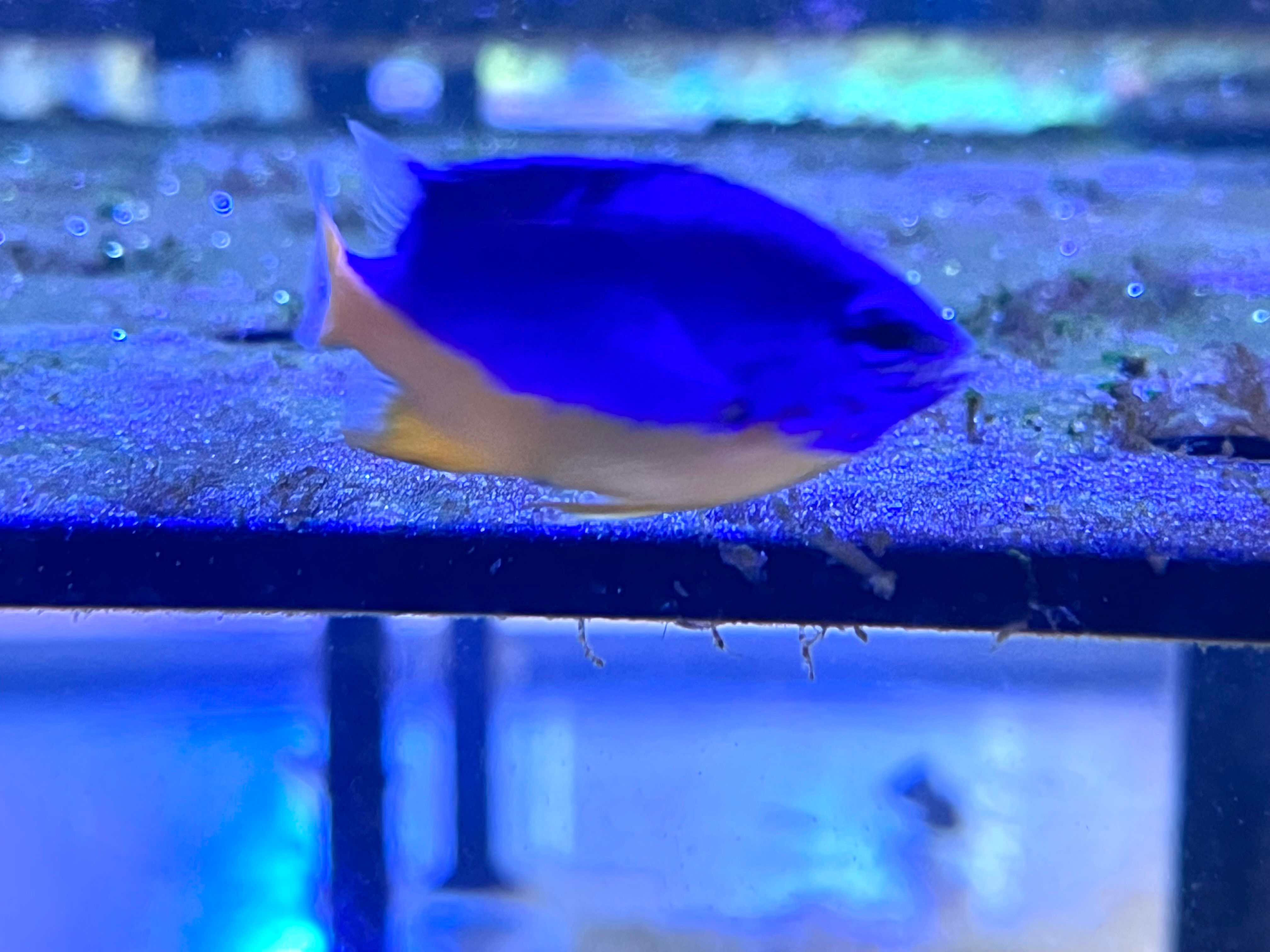

Yellow Belly Damselfish
Yellow Belly Damselfish (Chrysiptera hemicyanea / Pomacentrus auriventris)
Species: Chrysiptera hemicyanea / Pomacentrus auriventris
Coloration: Bright electric blue body with vivid yellow belly; sharp contrast in
Chrysiptera hemicyanea, softer gradient in Pomacentrus auriventris
Temperament: Semi-Aggressive / Territorial
Tank Size: Minimum 30 gallons (larger recommended for community setups)
Placement: Mid-water to upper rockwork zones; establishes territory around structure
Lighting: No specific requirement
Flow: Moderate to Strong
Diet: Omnivore
Feeding: Pellets, flakes, mysis shrimp, brine shrimp, marine blends (1–2x daily)
Reef Safe: Yes (behavior caution—may bully tank mates)
Care Level: Easy to Moderate
Yellow Belly Damselfish (Chrysiptera hemicyanea / Pomacentrus auriventris)
Common Names
Yellow Belly Damselfish, Yellowbelly Blue Damselfish, Yellowbelly Demoiselle, Azure Damselfish (varies by species and region)
Identification
The name “Yellow Belly Damselfish” is often used for a few closely related damselfish species, most commonly:
- Chrysiptera hemicyanea
Typically shows a vivid electric blue upper body with a clean, bright yellow underside. Very crisp color separation makes it one of the most recognizable damsels in the hobby. - Pomacentrus auriventris
Usually slightly more uniformly blue with a warmer yellow tint concentrated toward the belly region, sometimes less sharply divided than Chrysiptera species.
Size: Generally 5–8 cm (2–3 inches) when fully grown
Body Shape: Compact, oval-bodied, typical damselfish build with strong fins and quick swimming motion
Lifespan: 5–10 years in stable marine conditions
Behavior & Role
These are active, hardy reef fish known for their bold personality. They are constant swimmers and tend to establish a “home territory” quickly in the tank. While small, they behave with surprising confidence and can become the dominant fish in smaller marine setups.
They play a minor algae-grazing role but are more omnivorous scavengers than specialized grazers.
Compatibility & Caution
Yellow Belly Damselfish are considered semi-aggressive, especially as they mature.
- Can become territorial in smaller tanks
- May bully passive or slow-moving fish
- Best kept singly or as a carefully introduced group in larger systems
- Aggression increases significantly in tanks under 30 gallons
In larger reef systems, aggression is more spread out and easier to manage.
Care Level (with Water Parameters & Diet)
Care Level: Easy to Moderate (very hardy once established)
Water Parameters:
- Temperature: 24–27°C (75–81°F)
- Salinity: 1.023–1.026 SG
- pH: 8.1–8.4
- Alkalinity: 8–12 dKH
- Strong, stable filtration recommended
Diet:
- Omnivorous
- Accepts flakes, pellets, frozen mysis, brine shrimp, and marine blends
- Benefits from varied diet with occasional algae-based foods
Tank Mates
Best paired with:
- Clownfish (in appropriately sized tanks)
- Wrasses (larger peaceful species)
- Gobies (that establish different zones)
- Tangs in larger reef systems
Avoid:
- Very passive fish (firefish, small gobies in tight spaces)
- Other damsels in small tanks unless carefully planned
- New, slow introductions into established territories
Fun Fact
Despite their small size, Yellow Belly Damselfish are known for forming surprisingly structured “mini territories” in reef environments, often defending coral branches or rock crevices as if they were much larger reef fish. In the wild, they play an important role in reef micro-ecosystems by constantly interacting with plankton flow and shelter zones.