
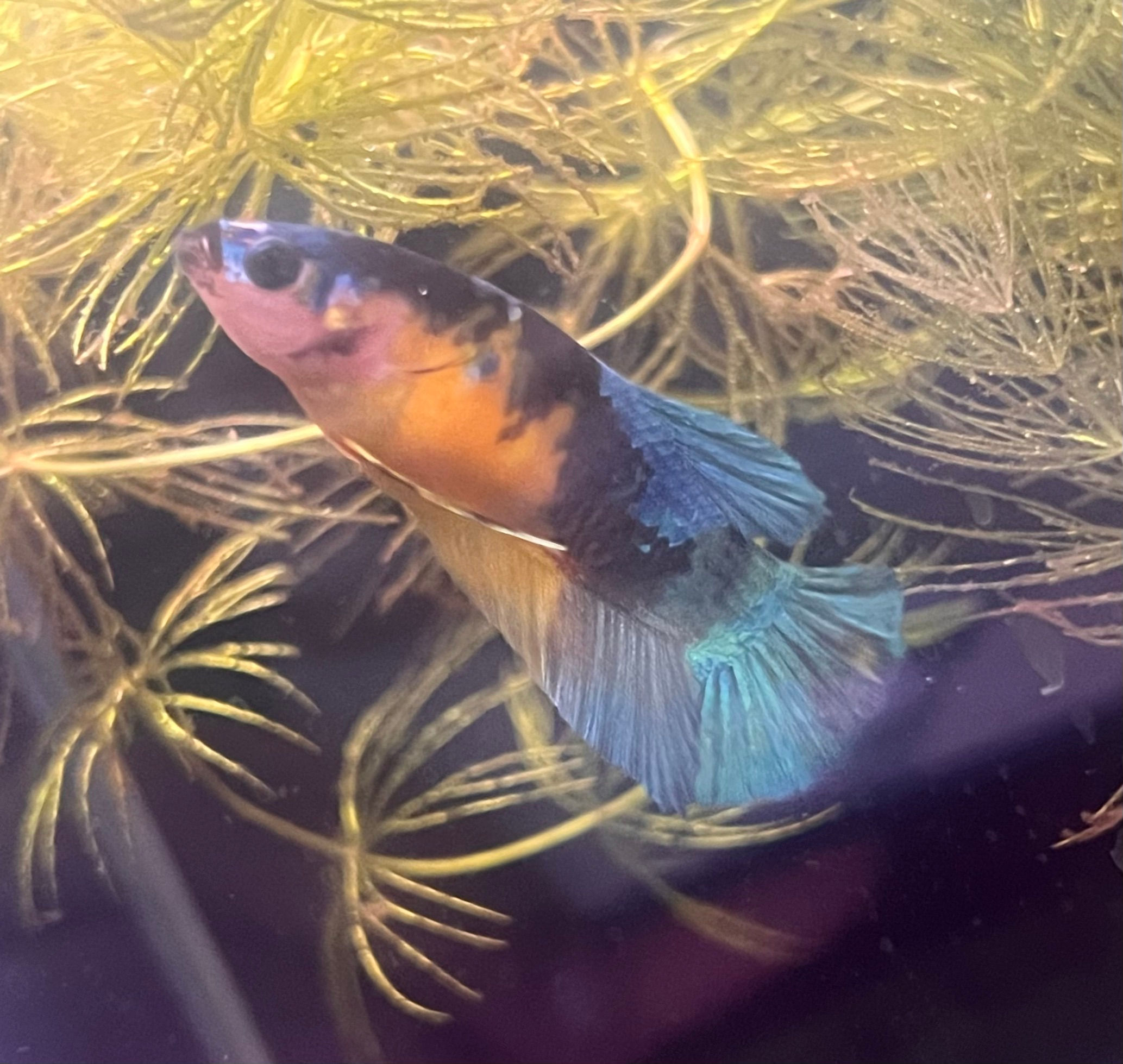
Koi Yellow Galaxy Male Betta
Koi Yellow Galaxy Male Betta (Betta splendens)
Species: Betta splendens
Growth Form: Small freshwater labyrinth fish
Coloration: Vibrant yellow to golden body with koi-inspired red, orange and white markings and pearlescent Galaxy scaling
Temperament: Generally peaceful but males are highly territorial
Tank Size: 5 gallons minimum (10+ gallons recommended)
Placement: Mid to upper levels; enjoys planted areas and surface cover
Lighting: Low to moderate
Flow: Low
Diet: Carnivore (quality Betta pellets, frozen/live bloodworms, brine shrimp, daphnia)
Feeding: Once or twice daily; feed small portions and avoid overfeeding
Care Level: Easy to Moderate
Koi Yellow Galaxy Male Betta (Betta splendens)
The Koi Yellow Galaxy Male Betta is a spectacular selectively bred variety of Betta splendens, combining vibrant koi-inspired colouration with an eye-catching Galaxy pattern and flowing male finnage.
This variety is known for its striking combination of yellow, orange, red, white and iridescent tones, often complemented by metallic or pearlescent scaling that creates the characteristic “Galaxy” appearance. Each fish can display a unique combination of colours and markings, making every Koi Yellow Galaxy Betta truly individual.
With its bright colour palette and flowing fins, this Betta makes an exceptional centrepiece fish for a planted freshwater aquarium.
Appearance
The Koi Yellow Galaxy pattern typically features a bright yellow to golden base colour, combined with areas of orange, red and white. Many specimens also develop contrasting dark markings and reflective metallic or pearlescent scales.
The Galaxy pattern comes from the scattered appearance of these reflective scales across the body, giving the fish a shimmering, star-like appearance under aquarium lighting.
Individual Bettas can vary considerably. Some may show predominantly yellow and orange colouration, while others may develop stronger red, white or metallic areas. Colour and pattern can also continue to develop as the fish matures.
The flowing caudal, dorsal and anal fins add to the overall display and complement the colourful body pattern.
Behaviour & Temperament
Male Bettas are generally peaceful toward many other species but can be highly territorial toward other male Bettas.
Never house two male Bettas together.
Koi Yellow Galaxy Bettas are often curious and interactive fish. They may readily approach the aquarium glass and become accustomed to their keeper's presence, particularly around feeding time.
Because of their flowing fins, they should be housed with peaceful tank mates that will not nip, chase or harass them.
Aquarium Requirements
A 5-gallon aquarium is the recommended minimum, while a 10-gallon or larger aquarium is preferred for greater water stability and swimming space.
A planted aquarium with gentle filtration is ideal. Live plants, floating vegetation and smooth decorations provide shelter, enrichment and resting areas.
Avoid strong currents, as long-finned Bettas can find excessive water movement tiring.
Recommended Setup
- Tank Size: 5 gallons minimum; 10+ gallons recommended
- Filtration: Gentle sponge filter or low-flow filtration
- Heating: Required
- Substrate: Any suitable freshwater aquarium substrate
- Plants: Live plants highly recommended
- Decor: Smooth rocks, driftwood, caves and Betta-safe ornaments
- Flow: Low
- Lighting: Low to moderate
- Lid: Recommended, as Bettas can jump
Recommended Water Parameters
- Temperature: 24–28°C (75–82°F)
- pH: 6.5–7.5
- Ammonia: 0 ppm
- Nitrite: 0 ppm
- Nitrate: Ideally below 20 ppm
- Water Hardness: Soft to moderately hard
Stable water parameters are more important than maintaining an exact value within the recommended range.
Regular partial water changes and consistent aquarium maintenance will help support good health and vibrant colouration.
Feeding
Bettas are carnivorous and require a protein-rich diet.
A high-quality Betta pellet should form the foundation of the diet, supplemented with frozen or appropriately sized live foods such as:
- Bloodworms
- Brine shrimp
- Daphnia
- Mosquito larvae
Feed small portions once or twice daily, providing only what the fish can comfortably consume.
Avoid overfeeding, as Bettas have small stomachs and can easily become overweight.
Tank Mates
A male Betta can be kept successfully as a solitary feature fish, which is often the simplest and safest arrangement.
In a mature, appropriately sized and well-planted aquarium, peaceful tank mates may sometimes be introduced. Peaceful snails are generally a good option, while shrimp may be possible depending on the individual Betta's temperament.
Individual Bettas have different personalities, and smaller tank mates may potentially be viewed as prey.
Avoid fin-nipping species, aggressive fish, highly active tank mates and other male Bettas.
Tank Environment
A planted aquarium with plenty of natural cover is ideal for a Koi Yellow Galaxy Betta.
Floating plants can provide shade and security near the surface, while broad-leaved plants offer useful resting areas for the fish's flowing fins.
As a labyrinth fish, Betta splendens regularly comes to the surface to breathe atmospheric air. Keep the surface accessible and avoid excessive surface agitation.
A secure lid is recommended to prevent jumping.
Care Level
Easy to Moderate
Bettas are suitable for many beginner aquarists when provided with proper heating, filtration and stable water quality.
Long-finned males require additional consideration when choosing filtration and décor. Gentle water movement and smooth aquarium furnishings can help reduce the risk of fin damage.
Our Recommendation
The Koi Yellow Galaxy Male Betta is an excellent choice for aquarists looking for a colourful and highly distinctive freshwater centrepiece fish.
Its combination of bright yellow and golden tones, koi-inspired red and orange markings, pearlescent Galaxy scaling and flowing finnage makes each specimen unique.
We recommend keeping this beautiful Betta in a heated, filtered and planted aquarium of 5 gallons or larger, with a 10-gallon or larger aquarium preferred for improved stability and comfort.